Building an Independent Laboratory
An evolving research space that combines ultrafast optics, precision motion, electronics, vacuum processing, conventional machining, and the practical infrastructure required to make them work together.
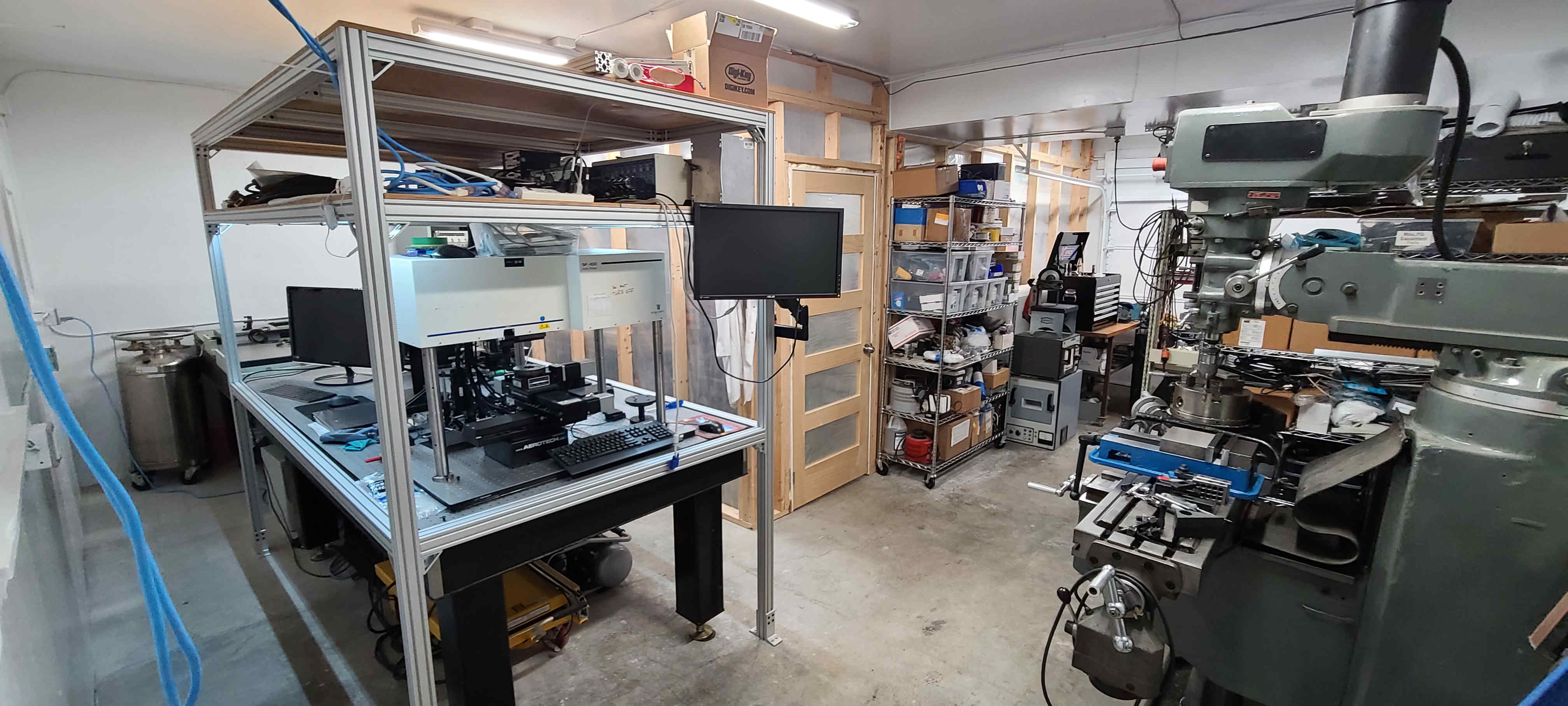
A laboratory assembled around capability, not a catalogue.
The independent laboratory began as a small electronics and mechanical workspace and expanded as technically significant equipment became available. Each addition was selected to enable a class of experiments: ultrafast optical processing, precision positioning, thin-film deposition, laser diagnostics, electronic prototyping, or the fabrication of custom parts.
Many systems arrived incomplete or non-operational. Restoring and integrating them is part of the project itself, requiring documentation research, reverse engineering, custom interfaces, safety systems, utilities, and careful performance verification.
From optical experiment to finished hardware.
The value of the space is the ability to move between disciplines without treating every custom component or interface as an external dependency. Optical layouts can be designed alongside their electronics, motion hardware, control software, mounts, vacuum fixtures, and diagnostic methods.
- Femtosecond and nanosecond laser sources for material processing and optical experiments.
- Motorized stages, microscope imaging, beam diagnostics, and fibre-handling hardware.
- Electronic design, embedded control, data acquisition, soldering, and instrumentation repair.
- Manual machining and fabrication for experimental mounts, enclosures, and mechanical interfaces.
- Vacuum and thin-film processing capability for optical and electronic prototyping.
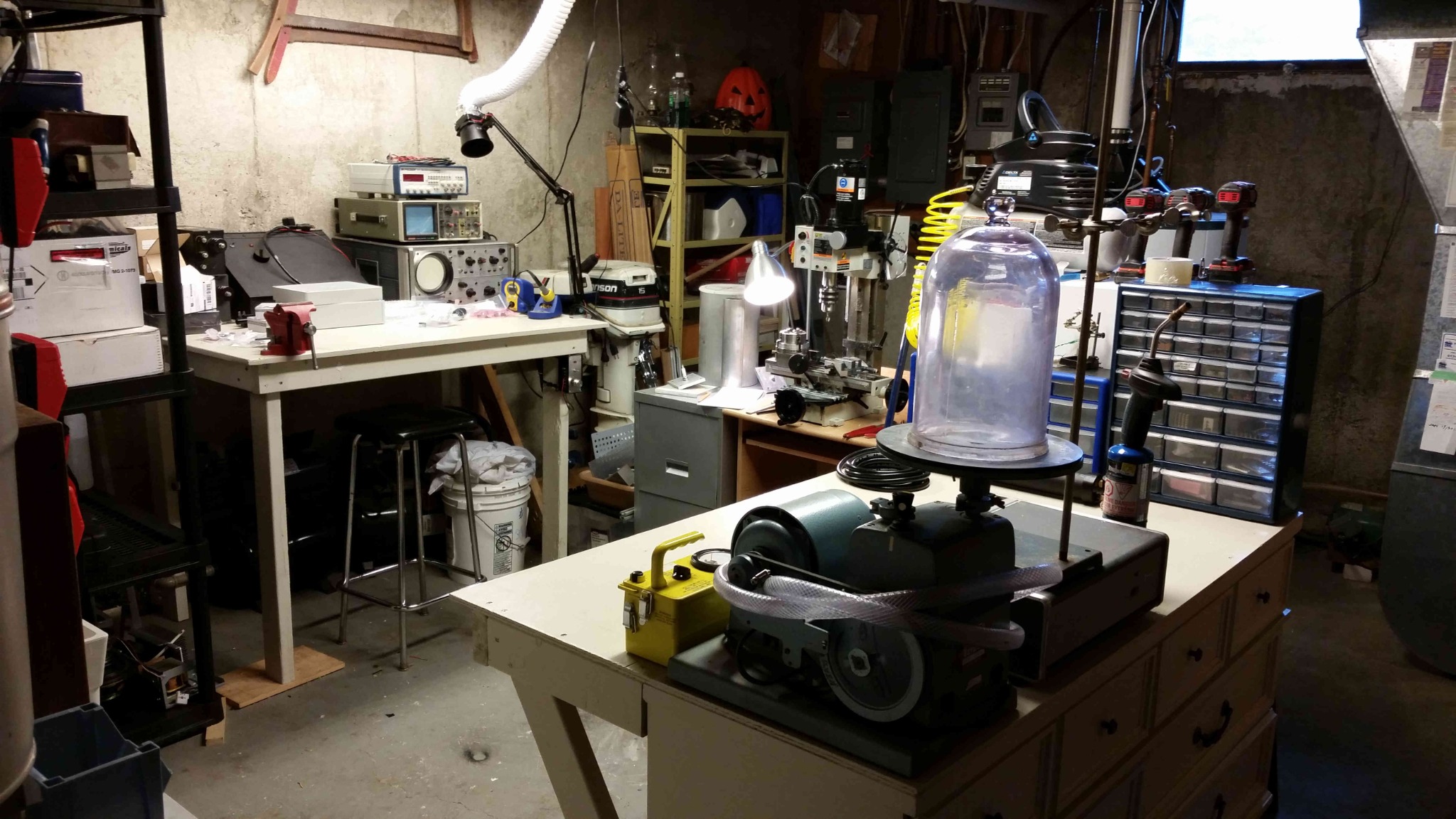
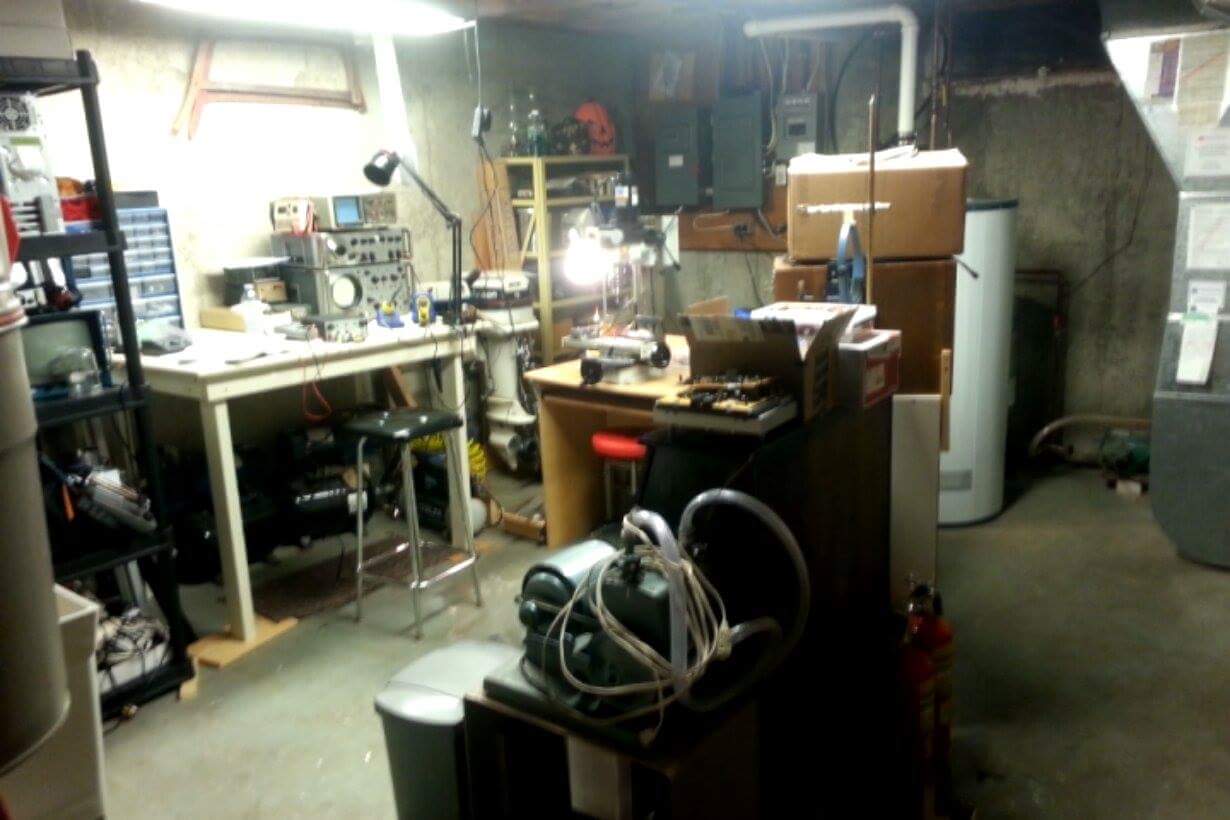
An iterative build over many years.
The photographs document a progression from a compact basement workspace to a dedicated laboratory with enclosed laser systems and substantial mechanical infrastructure. The physical growth reflects a parallel development in technical ambition: from component-level experiments to integrated photonics and microfabrication systems.
The layout continues to evolve around workflow, laser safety, vibration control, thermal management, electrical distribution, equipment access, and the need to reconfigure experiments without dismantling the supporting infrastructure.
Independent infrastructure for long-horizon work.
The laboratory supports experiments that benefit from patient restoration, unconventional hardware integration, and long development cycles. It also serves as a training environment for practical optics, electronics, motion control, machining, and scientific documentation.
The long-term objective is a self-contained platform capable of taking a photonics idea from preliminary optical test through instrument development, device fabrication, and measurement.